
By Charlie Hasberry, Director of Jura Capital
For decades, the golden rule of wealth preservation was written in stone: equities for growth, bonds for a good night’s sleep.

Then came 2022. It was the year the bedrock cracked.

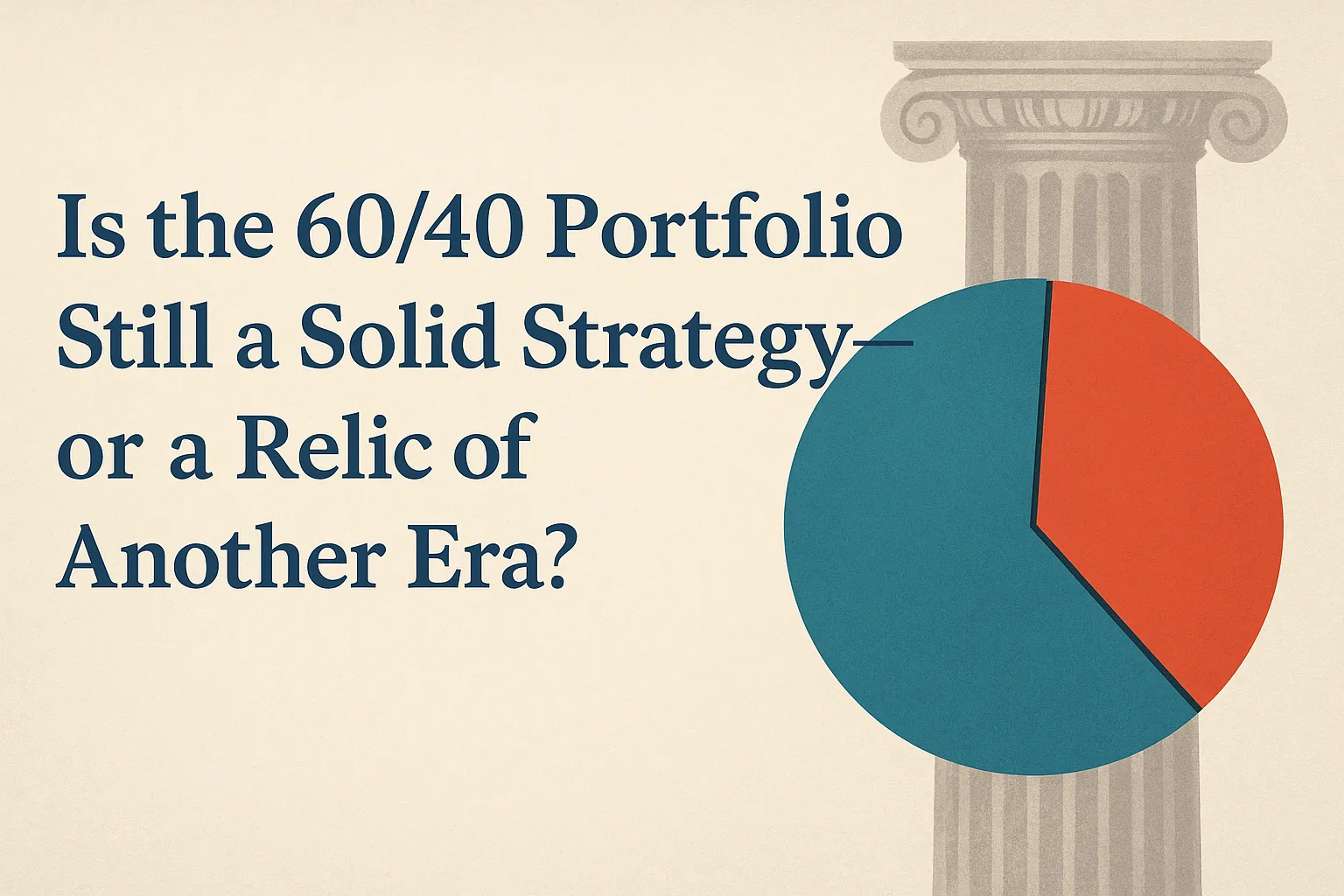
According to Morningstar, it was the most catastrophic year on record for the traditional 60/40 portfolio. For investors, this was not just a red mark on a ledger. It was the chilling realization that the “safe” half of their portfolio had stopped acting safe.
The defensive anchor had failed. Fixed income was no longer fixed.
A Shift Investors Can Feel, But Cannot Always Explain
Speak to investors today, and the language in the room has noticeably shifted. Certainty has been replaced by hesitation.
The simple equation of balancing risk with traditional bonds has been exposed to a harsh new reality. Aggressive interest rate movements and persistent inflation have not just eroded real returns. They have fundamentally altered market mechanics. Bonds, historically relied upon to dampen volatility, have frequently moved in lockstep with the very equity markets they were supposed to offset.
Even as the macroeconomic dust settles, the outlook remains frustratingly uneven. The European Central Bank expects headline inflation to normalize around 1.9% in 2026, but core and services inflation remain stubbornly elevated. Concurrently, the OECD projects a softening of global growth.
The environment is improving, but it is not resolving.
And that distinction matters. It leaves investors in a deeply uncomfortable paralysis. Capital remains allocated, but confidence has yet to return.
Regaining Control: The Pivot to Structure
This unease has sparked a subtle but profound shift in investor psychology. The focus is no longer about blindly chasing yield. It is about regaining control.
Investors have stopped asking, “What does this yield?” Instead, they are demanding transparency:
- What underlying asset is this actually tied to?
- When does my capital return?
- What tangible mechanism is driving this performance?
This marks a pivotal departure from market performance and a conscious move toward structural certainty. Sophisticated capital is flowing into sectors of the market that operate by a different set of rules. Not traded daily. Not priced by fleeting market sentiment. Not directly exposed to macroeconomic whiplash.
Instead, they are turning to structured and asset-backed income.
Think of traditional fixed income as sailing on the open ocean. You are entirely at the mercy of the macroeconomic weather. Structured income, conversely, is like navigating a canal system. It is engineered and predictable.
These investments are built around defined timeframes, backed by identifiable physical assets or cash flows, and designed to deliver predetermined outcomes agreed upon at the outset. While institutional investors have utilized variations of these strategies for decades, what is shifting rapidly today is broader market awareness.
Bridging the Access Gap in Private Markets
The concept of investing beyond public markets used to carry a specialist stigma. That era is over.
Recent research from McKinsey highlights that alternative forms of capital now represent a massive share of global assets. Private markets have expanded at an unprecedented rate over the last decade.
The direction of travel is undeniable. Capital is diversifying.
However, while private markets are becoming mainstream in conversation, access has lagged far behind awareness. For many investors, alternative opportunities still feel opaque, overly reliant on exclusive relationships, or simply out of reach.
That lingering gap between knowing these assets exist and actually allocating capital to them is where the current frustration lies.
What Sophisticated Capital is Doing Differently
The smart money is not executing wholesale portfolio liquidation. It is engaging in targeted reallocation. Sophisticated investors are not abandoning traditional markets. They are complementing them.
By introducing structured income strategies, investors are effectively reducing their reliance on market timing, shortening their capital horizons, and introducing highly predictable return profiles. In an era where public markets feel increasingly uncertain, predictability commands a premium.
The key distinction is this. Traditional fixed income is largely market-driven, while structured income is largely outcome-driven. This approach does not magically erase risk. Rather, it shifts where that risk sits and makes it transparent. Returns become a function of the investment’s underlying structure, rather than the unpredictable whims of daily price movements.
Where Do We Go From Here?
Fixed income has not disappeared. But its automatic inclusion in a portfolio is rightfully being interrogated.
Once an investor’s expectation of safety is broken, it is incredibly difficult to rebuild without looking beyond traditional borders.
For investors ready to explore alternatives, the primary challenge is not merely identifying opportunities. It is deeply understanding them. You must know exactly how they are structured, the precise origin of their returns, and how they harmonize with your existing portfolio.
We break down exactly how to navigate this new landscape in our latest research:
Alternatives to Fixed Income in 2026: Where Investors Are Moving Capital
This comprehensive guide details:
- The exact mechanics of how structured income strategies work in practice.
- Where institutional and sophisticated capital is currently being repositioned.
- The critical criteria to look for when assessing alternative investment opportunities.
- A real world example of a bond we have previously introduced to our clients
👉Download the guide to explore the full picture
Alternatively, if you prefer a direct approach, let’s start with a conversation. The right allocation is never one-size-fits-all.
It depends entirely on what your capital is doing today, and precisely what you need it to do tomorrow.